


SAFETY on the via ferrata
Tips and advice for staying safe in the mountains
Safety is our top priority, alongside the mountain experience. This is based on adhering to and observing important rules of conduct and safety instructions, as well as careful route planning and appropriate equipment.
Climbing via ferrata routes involves risks. Inadequate preparation, substandard equipment or incorrect behaviour can lead to a risk of falling! Qualified mountain guides will help you acquire the necessary skills.
10 tips for your via ferrata experience
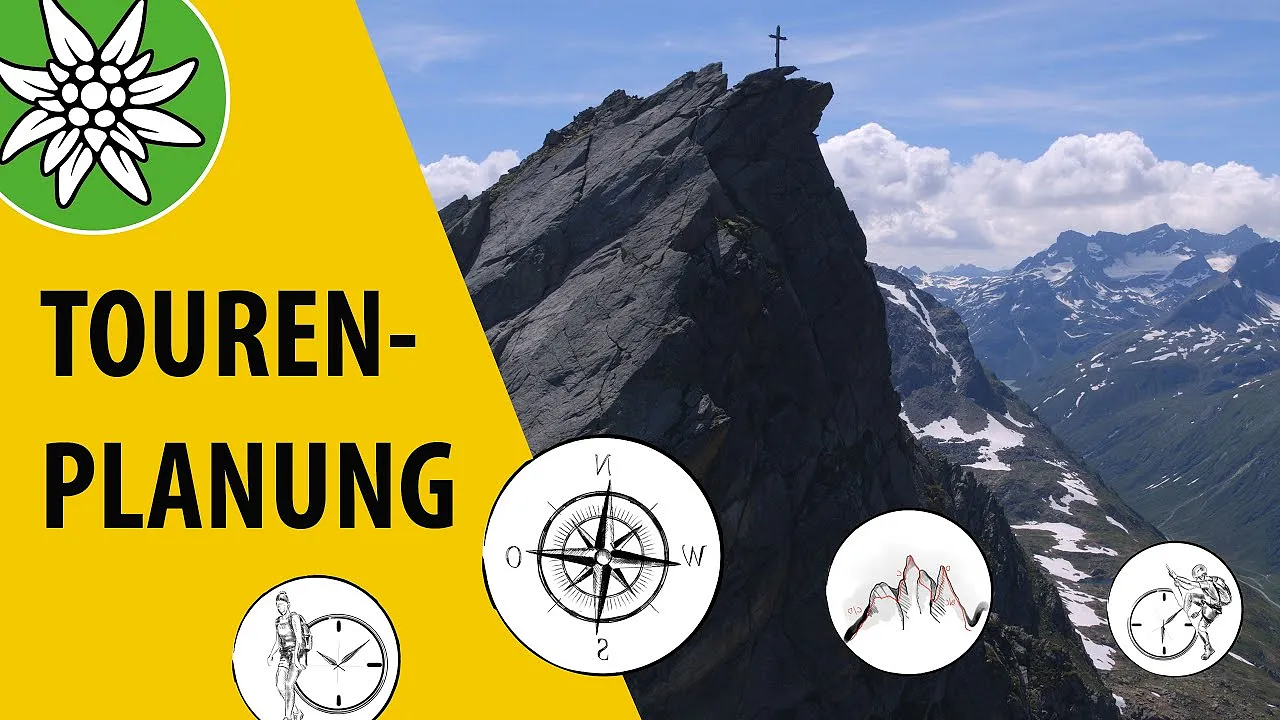
Planning is the key to safe and enjoyable routes. Make sure you find out exactly about the difficulty and length, the ascent and descent, the weather and conditions. Detailed descriptions with topos are available for all via ferrata routes in guidebooks or online. The difficulty rating is particularly important when planning, especially as ‘getting stuck’ due to exhaustion is the most common emergency on via ferrata routes. You should therefore focus not only on the grade of individual sections, but also on how sustained the difficulties are and, consequently, the overall demands of the route.
This checklist will help you gather all the relevant information for your via ferrata route:
| Tour | Current conditions | Weather | Group |
|---|---|---|---|
| Are you aware of the overall requirements of the via ferrata and the individual challenges it presents, as well as the length and elevation gain of the route? | Is the via ferrata dry? | Does your planned trip match the weather forecast? | Are all members of the via ferrata group physically and mentally up to the task? |
| Are you aware of the ascent and descent routes and the challenges you can expect? | Is snow expected on the via ferrata, or are there patches of old snow on the approach and descent routes? | Are thunderstorms expected later today? | Is the group size appropriate for the tour destination? |
| Do the ascent or descent require additional equipment such as crampons and an ice axe? | Is a cold front on its way, one that can bring snowfall in the mountains even in summer? Does the intense heat mean you’ll need to choose a shaded destination or set off particularly early? | Have you told anyone else about your destination? | |
| Are there any unprotected sections on the descent where there is a risk of falling? | Are there any children coming along? | ||
| Do you know of any alternative options? |
Recommendation: Mountain Rescue Insurance
Mountain rescue operations are not free! By taking out mountain rescue cover in good time (e.g. travel insurance from European Travel Insurance or as a a sponsor of the Tyrolean Mountain Rescue Service, as a member of the Alpine Club, via the ÖAMTC/ADAC or credit cards and private accident insurance policies), your mountain rescue costs may be covered by your insurance up to the respective defined limit.
Please note! Health insurance providers do not cover the cost of rescue from alpine emergencies!
Choosing routes that are too difficult detracts from the experience and can lead to dangerous situations.
‘Stalling’ due to exhaustion is the most common emergency on via ferratas! It is usually long via ferratas with lower-grade but sustained difficulties that can lead to climbers becoming overwhelmed and thus to dangerous situations. An economical climbing technique, mainly with outstretched arms, combined with good ascending technique, saves a huge amount of energy. Hanging with one arm in the rope anchor whilst repositioning the via ferrata set also saves energy. Warning: Whilst a via ferrata set prevents a ‘total fall’, falls are still strictly prohibited – unlike in sport climbing – as a fall on a via ferrata can result in serious injuries! Overestimating one’s abilities can lead to dangerous situations on a via ferrata.


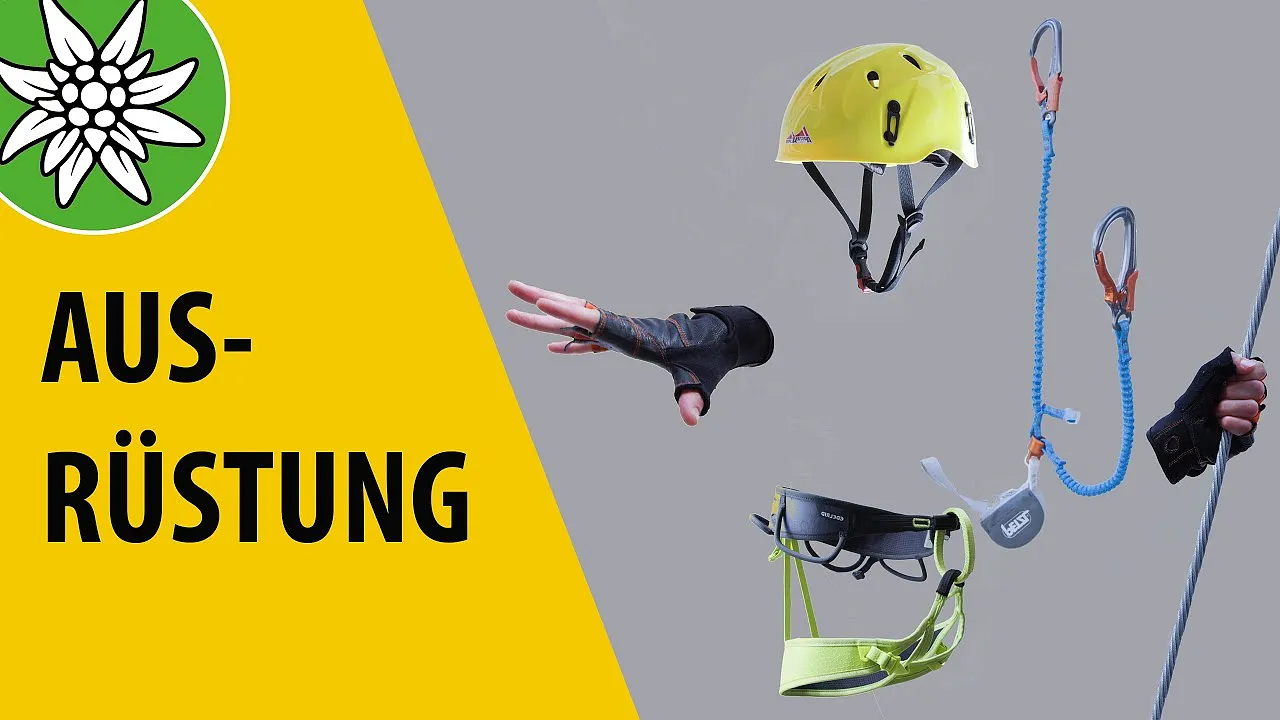
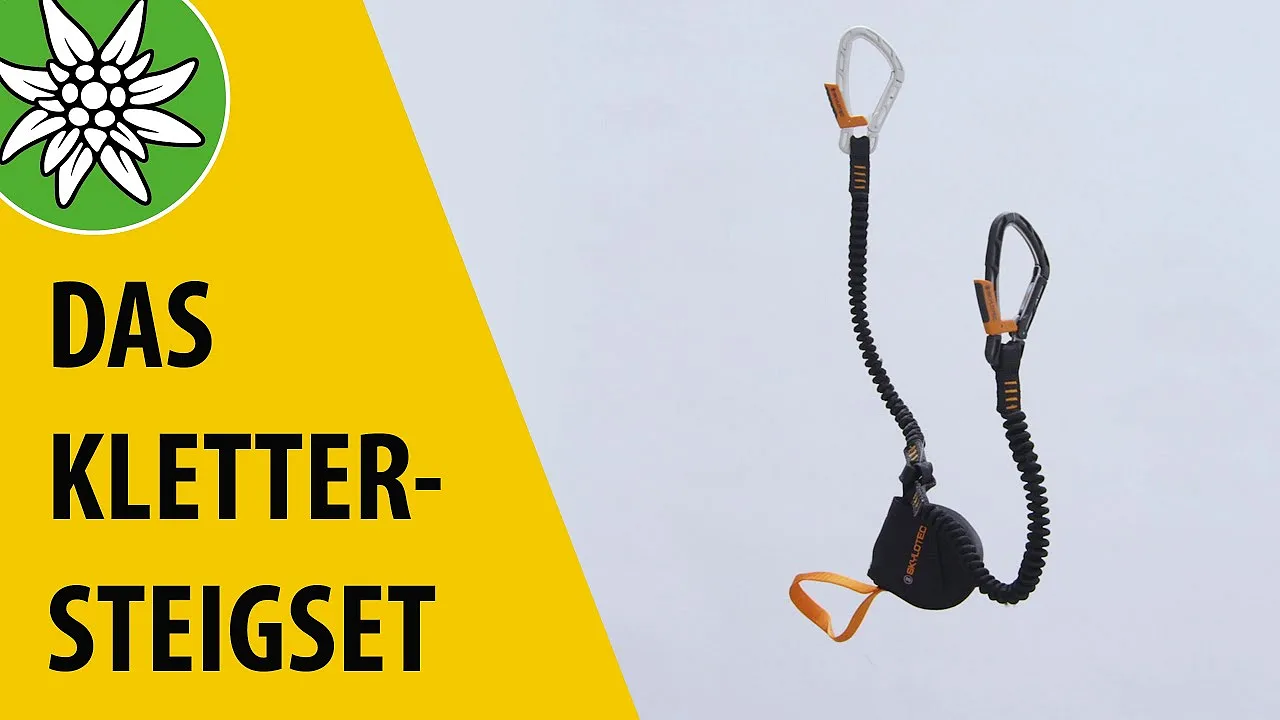
Climbing harness, via ferrata set and helmet: only the consistent and correct use of this equipment ensures that via ferrata routes can be tackled safely. In case of an emergency, you should carry a first-aid kit and a mobile phone (European emergency number 112).
Equipment checklist
- Climbing harness
- Helmet
- Via ferrata set
- possibly via ferrata gloves
- Cold-weather gear (hat, gloves)
- Mobile phone with a fully charged battery
- ID, insurance card, cash
- sturdy walking/mountain boots with a grippy treaded sole
- Rain gear (rain jacket/poncho, rucksack cover)
- Hiking map, route description and information leaflets
- First-aid kit including a survival blanket, bivouac bag and head torch
- Sun protection (sunglasses, sun cream, lip balm, headwear)
- Food and drink (plenty to drink and a snack) – you’ll find places to stop for refreshments in the route descriptions
- Outdoor clothing suitable for the weather, including a change of clothes (waterproof trousers or gaiters)
A lightning strike is life-threatening. Rain, wet conditions and cold weather increase the risk of falling.
On hot, humid days in the height of summer, thunderstorms are frequently expected throughout the day. Check the weather forecast for the likelihood of thunderstorms and ensure you return from your hike in good time. Allow plenty of time and turn back promptly if you notice typical signs of a thunderstorm, such as rapidly forming cumulonimbus clouds and gusty winds. Well-developed anvil clouds, electrical charges in the air and the onset of sleet showers are the most serious warning signs of an impending thunderstorm. Should you nevertheless be caught unawares by a thunderstorm, taking the correct action can save your life. Under no circumstances should you be unsecured in terrain where there is a risk of falling!
A via ferrata always acts as a giant lightning conductor. A word of warning is also in order regarding the wrong reaction should you ever be caught out by a thunderstorm: Stay connected to the wire rope! The risk of a fall far outweighs the risk of a lightning strike.
Other potential alpine hazards:
Sudden changes in weather, rain and snowfall, ice, avalanches, wind, fog > Changing weather conditions alter the terrain on a daily basis. Assessing whether a route can be climbed safely is solely the responsibility and discretion of each individual!
Rockfall, snow load and frost damage can cause damage to the via ferrata. Do not attempt via ferratas that are closed.
On all via ferratas, it is important to be vigilant and not to blindly trust every route. Often, you can gauge the overall condition simply by looking at the start of the route and the state of the first few metres. It is essential to check whether the via ferrata is officially ‘open’ or – due to maintenance work or seasonal conditions – ‘closed’. Damage to via ferratas can occur, particularly in spring. Pay particular attention to the ends of the steel cables after the last anchor point: these are sometimes loose!
Tip
What should you do in an emergency?
Dial the emergency number
140 - Alpine emergency service (mountain rescue)
112 - European emergency number
133 - Police
144 - Ambulance
Check each other’s equipment: harness buckles, connection between the via ferrata set and the climbing harness, helmet.

Only one person may be on the route between two fixed points.
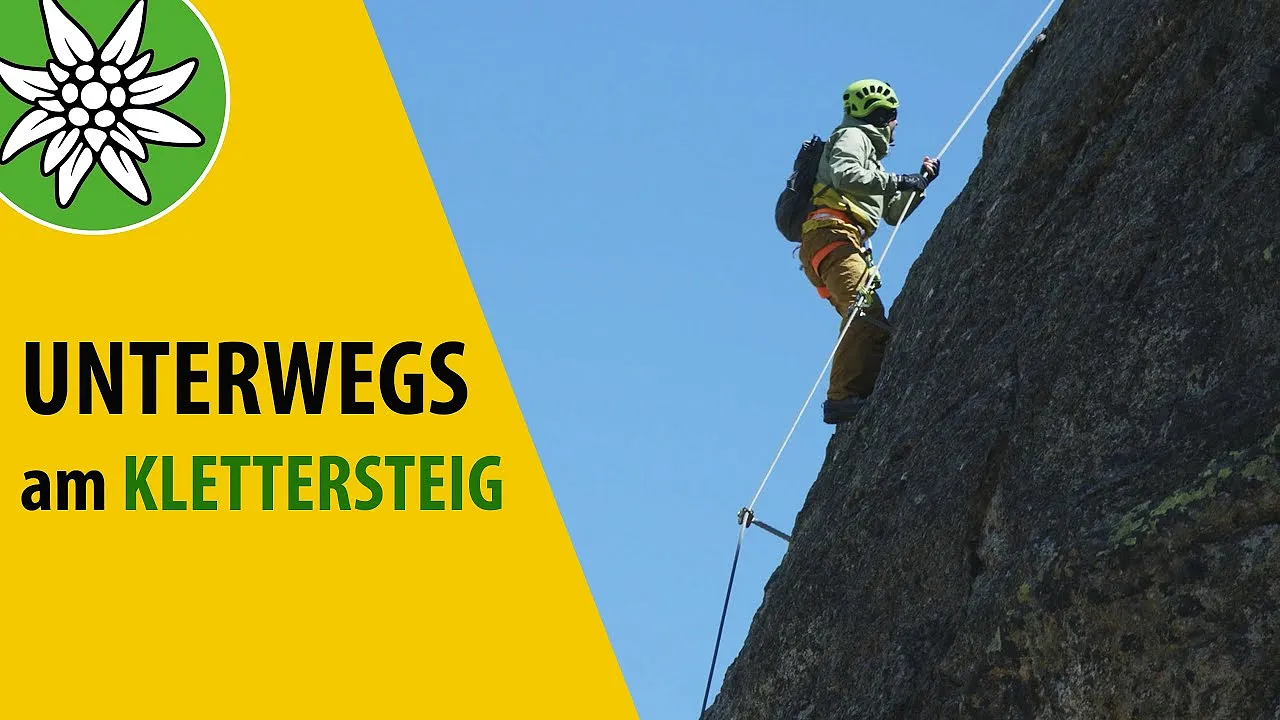
Ensure that there is always only one person on the relevant via ferrata section (= section between two anchors) at any one time. The second person, who is lower down, must maintain a sufficient distance from the person above, as if the first person were to fall, they would plummet several metres below the anchor point in their section due to the via ferrata brake opening.
Communication and consideration help prevent dangerous situations when overtaking or encountering oncoming climbers.
Even if you are well up to the challenges of the via ferrata, ensure you are always secured when encountering other via ferrata climbers! Only overtake after a brief discussion and use suitable sections for this. Avoid heavily frequented, ‘overcrowded’ via ferratas where traffic jams are likely.
Climbing carefully helps prevent rockfall.
We protect ourselves against rockfall by wearing a helmet. We also avoid dislodging rocks by walking carefully and not too hastily. This applies not only on the via ferrata but also during the ascent and descent. If there is a rockfall, the warning call is ‘Watch out for falling rocks’. However, we do not look up; instead, we press ourselves upright against the rock face and wait until the rockfall has passed.

To protect the mountain environment: do not leave any rubbish behind, avoid making noise, stay on the paths, do not disturb wild animals or grazing livestock, leave plants undisturbed and respect protected areas. Use public transport or carpool when travelling here.
Rubbish
Nature is a precious resource – so please keep the mountains clean and do not leave any rubbish behind! Rubbish is still here – even long after you’ve gone!

Guided climbing sessions

Staying safe on a via ferrata
Equipment | SicherAmBerg
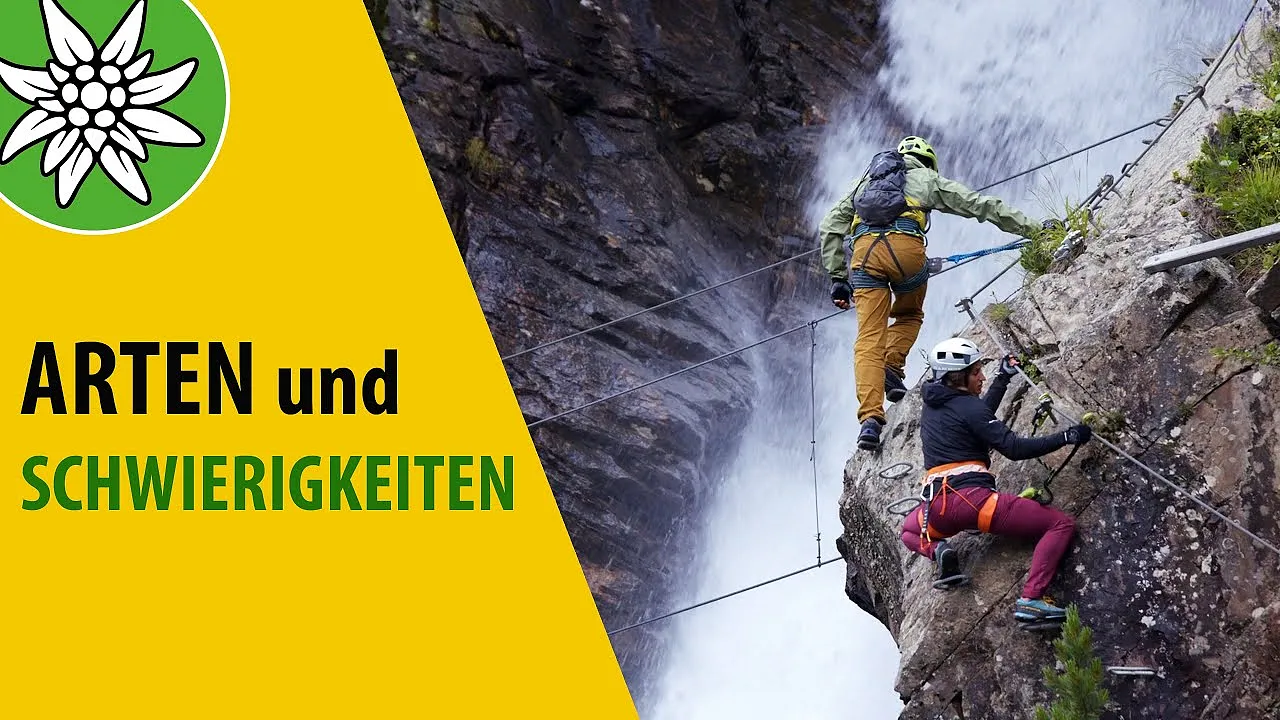


Difficulty classification
| A – easy | Simple, secure routes. Leaning (longer) or vertical (shorter) ladders, handrails and iron clamps. Some sections may already be exposed, but are easy to navigate. Generally suitable for sure-footed mountaineers with a head for heights, without the need for KS belaying. Well suited to beginners. |
| B – moderately difficult | The terrain is already quite steep, with some exposed sections requiring small steps. Long, vertical ladders, iron rungs and footholds. This can be quite strenuous and physically demanding. Even experienced mountaineers use safety equipment. Climbing difficulty: approx. II–III |
| C – difficult | Steep to very steep rocky terrain, mostly involving passages requiring small footholds, which are almost always exposed. Some slightly overhanging ladders may be encountered. Iron clamps and footholds may also be somewhat further apart. At times very physically demanding. Climbing difficulty: approx. III – IV |
| D – very difficult | Vertical, often overhanging terrain. Clamps and bolts are often spaced far apart. Usually very exposed and often secured only with steel cable. Considerable arm strength, good climbing technique and a high level of fitness are essential. Sometimes combined with easy climbing (I–II) without protection. |
| E – extremely difficult | Mostly overhanging rock terrain. Extreme demands on strength, climbing technique, agility, courage and mental fortitude. For experienced via ferrata experts only. Optimal physical fitness required. A belay sling is recommended! All requirements as for ‘D’, but to an even greater extent. There is also an intermediate level, “F”, for exceptional difficulties. |

The weather in the Wilder Kaiser
Today
2026-10-29
Dry and partly sunny throughout the day, with cloudy periods from time to time.
Morning

2 °C
Afternoon

4 °C
Evening
2 °C
7 h
5 km/h
-
Tomorrow
2026-10-30

5 °C
1 °C
8 h
-
Saturday
2026-10-31
4 °C
-1 °C
7 h
70 %
Sunday
2026-11-01

-3 °C
1 h
70 %
Last updated at 10/29/2026, 02:00 PM
Please note that the information provided regarding safety in the mountains consists solely of recommendations from the Wilder Kaiser Tourist Board. All information is provided without guarantee and is subject to change.